
Resource Guides & Clinical Workflows

Screening for Intimate Partner and Domestic Violence
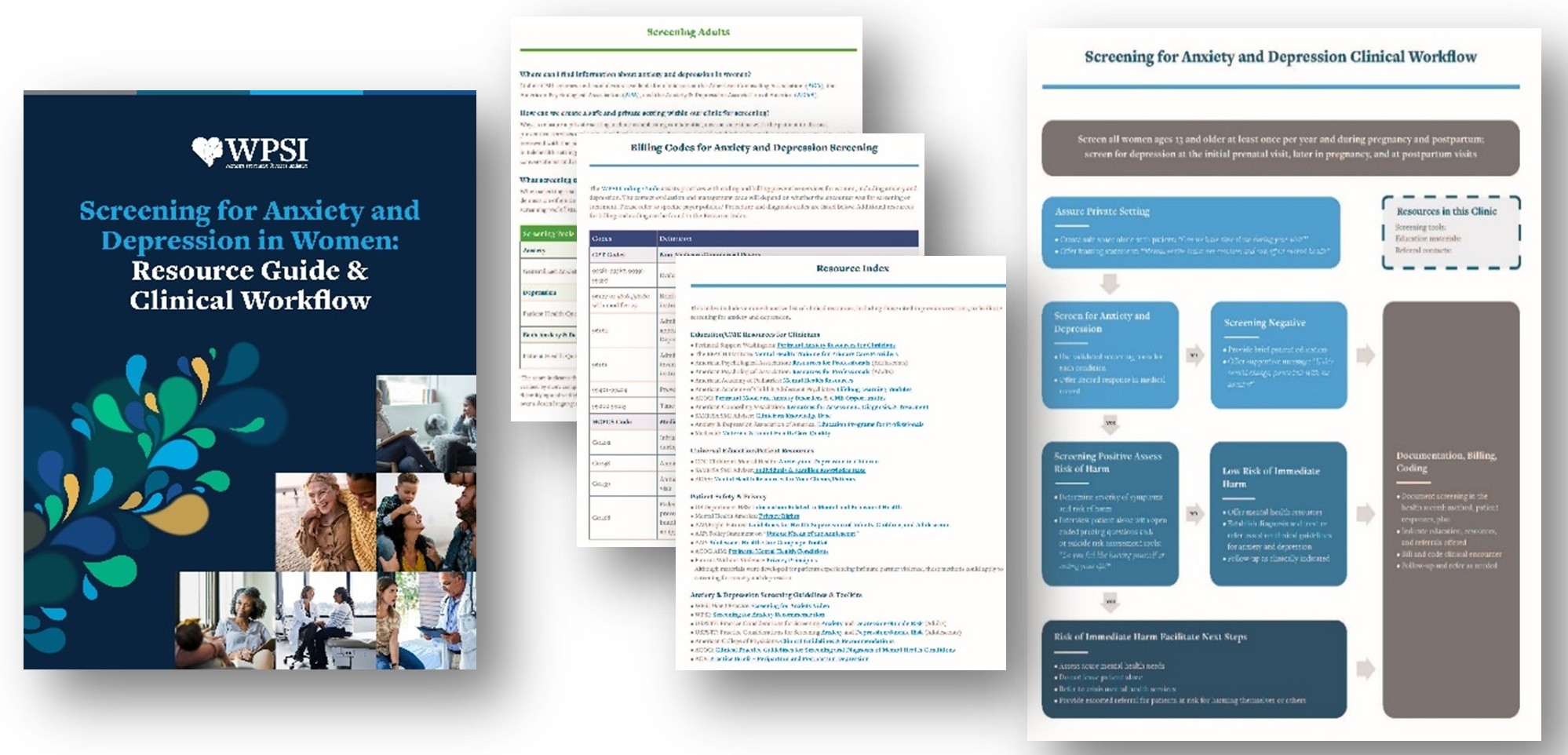
Screening for Anxiety and Depression in Women
While anxiety and depression are separate conditions, they often co-exist and screening, assessment, and treatment follow similar clinical pathways. The WPSI recommends screening for anxiety in adolescent and adult women, including those who are pregnant or postpartum. Optimal screening intervals are unknown and clinical judgement should be used to determine screening frequency. Given the high prevalence of anxiety disorders, lack of recognition in clinical practice, and multiple problems associated with untreated anxiety, clinicians should consider screening women who have not been recently screened.
The purpose of the resource guide and the accompanying clinical workflow diagram are to facilitate screening for anxiety and depression in clinical practice for women aged 13 years and older, including during pregnancy and postpartum when these conditions can be more common. This guide provides clinician resources to support screening and assessment and information on billing and coding, selected national and regional resources, considerations for implementation in clinical practice, and a resource index. This resource guide should be further customized to specific clinical practices as appropriate.
Disclaimer and Copyright Notices
The WPSI developed these guides and the accompanying diagrams and are intended as resource materials for health professionals and should not replace individual considerations and clinical judgement. Information in the Resource Guide is based on recommendations and resources available May 1, 2025.
©️ 2025 by the ACOG Foundation. All rights reserved. No part of this publication may be reproduced, stored in a retrieval system, or transmitted, in any form or by any means, electronic, mechanical, photocopying, recording, or otherwise, without prior written permission from the publisher. This project was supported by the Health Resources and Services Administration (HRSA) of the U.S. Department of Health and Human Services (HHS) under grant number UHOMC29440, Bright Futures for Women’s Health: Standard Practice Guidelines for Well Women Care. This information or content and conclusions are those of the author and should not be construed as the official position nor policy of, nor should any endorsements be inferred by HRSA, HHS, or the U.S. Government.

Well-Woman Chart

WPSI Coding Guide

Patient Education

Social Media Tool Kit
